
By admin / October 15, 2026
SEO Entity-Based SEO: A Practical Guide for Local Businesses
Meta Description: Entity-based SEO helps Google understand your business, not your keywords. Learn a 3-step process to start this week plus mistakes to avoid.
URL Slug: /entity-based-seo-guide
keyword: Entity-Based SEO | Secondary: Entity SEO optim
For a time I treated SEO like a placement game. I picked a keyword put it in the title the headings and the first paragraph and hoped for the best. Then I started working on business sites. Noticed something. Ranking is not about repeating a phrase. It is about helping Google understand what a page is about how its ideas connect and whether it answers what the searcher actually wants.
That shift led me to Entity-Based SEO. In this guide I will explain what Entity-Based SEO is, how I approach it as a marketer in Thrissur the mistakes I see often and three steps you can take this week.
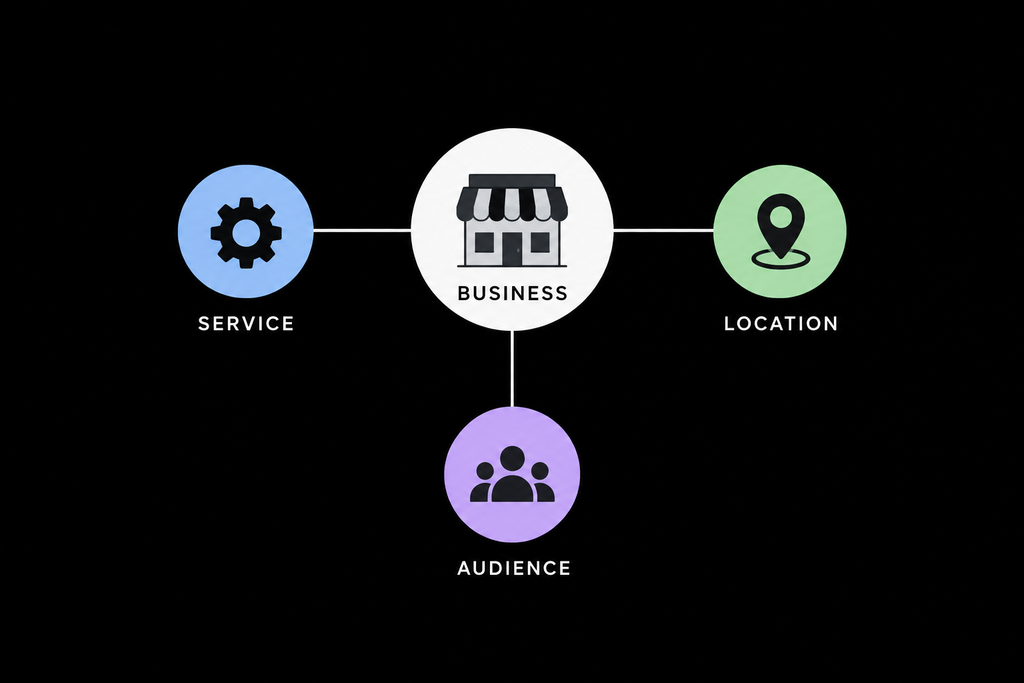
What Is Entity-Based SEO?
An entity is a defined thing: a business, a person, a place, a service or a concept. Google does not match words anymore. It tries to understand these things and how they relate to each other.
Entity-Based SEO is the practice of making those things and their relationships clear on your website. Of asking, “Which keyword should this page rank for?” you ask, “What does Google need to understand about this business, its services and its pages?”
If you also hear the terms Entity SEO optimization and Semantic SEO they point to the idea. Semantic SEO focuses on meaning and context over exact-match phrases. Entity SEO optimization is the hands-on work of building that clarity into your content, structure and data.
Why Keywords Alone Are Not Enough
Let us use an example. Say you want to rank for ” marketing services in Thrissur.” The old approach would repeat that phrase again and again.
A better approach builds context around that phrase. You cover entities such as SEO, social media marketing, Google Ads and local businesses. You explain how each service helps a business in Thrissur. You link those ideas together so the page has a purpose.
Keywords still matter. I want to be clear about that. Entity-Based SEO does not replace keyword research. Entity-Based SEO makes keyword research more meaningful because it shows you the topics and questions that sit behind each search.
How I Apply Entity-Based SEO to a Local Business Site
Here is the process I follow. I should be honest: this is the framework I work from. I am not sharing traffic numbers here because results vary by site, competition and timing.
- Analyze search intent. I list the services, the audience and the questions customers are likely to ask.
- Build a content structure. I organize the site around core services supporting topics, location details and FAQs.
- Link pages. Each page gets a purpose and links to pages naturally.
- Strengthen the business identity. I check that business details are consistent the Google Business Profiles optimized and structured data is used where it fits.
- Measure over time. I track impressions clicks, relevant queries, qualified enquiries and conversions in Google Search Console and analytics.
One small change that helps a lot is making the link between the target keyword and the pages overall topic obvious. I look at how the headings, content and related services work to communicate one purpose. Then I watch Search Console to see whether impressions, clicks or the range of queries improve.
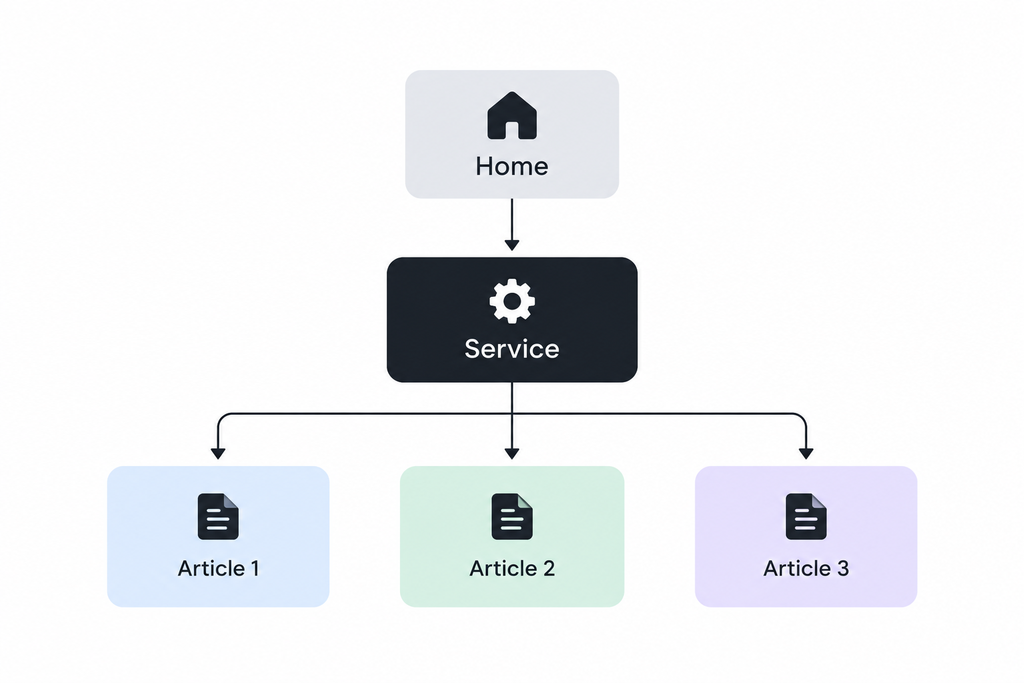
Image placement: after this section. Alt text: “Website structure map for Entity-Based SEO with service pages linked to supporting articles”.
3 Steps to Start Entity-Based SEO This Week
You do not need tools. You need focus.
Step 1: Identify Your Core Entities
List the subject of your website the services you offer the people you serve and the ideas that connect with your business. For a marketer based in Thrissur that list might include marketing, SEO, social media marketing, Google Ads, SEO and Thrissur itself.
The goal is to see how these topics relate to your business and to what customersre looking for.
Step 2: Build Meaningful Connections Between Pages
Review your website. Do you have dedicated pages for your services? Do you have supporting articles?
For example your SEO service page could link to articles about keyword research, technical SEO and local SEO. That gives users and search engines a path through your topics.
Step 3: Strengthen Credibility and Clarity
Make sure the information about your business is accurate and consistent everywhere. Use headings, descriptive page titles and relevant internal links. Add data where it truly applies. Google’s own introduction to data explains what it can. Cannot do.
Then check Google Search Console for impressions clicks and queries. Use the data you find to fill gaps.
My advice: Do not try to optimize every entity at. Start with one service page make its subject clear connect it to related content and measure it. Expand once that foundation works.
Common Entity-Based SEO Mistakes
The mistake I see is treating entity-based SEO as a technique of building on SEO fundamentals. Here are the five problems I notice most.
- Focusing on keywords. Pages get optimized for terms while the broader topics, places and services that give those terms meaning are ignored.
- Adding schema without improving content. Structured data helps search engines interpret a page. It cannot rescue content.
- Forcing entity connections. Some marketers stuff related terms into articles just to look comprehensive. Every topic should support the page’s purpose and the reader’s intent.
- Ignoring linking and site structure. When service pages and supporting articles are disconnected topical relationships become hard to see.
- Expecting rankings. Results depend on quality, competition, site authority, technical health and relevance. There is no shortcut.
Entity-Based SEO vs Traditional Keyword SEO
| Traditional keyword SEO | Entity-based SEO | |
|---|---|---|
| Main question | Which keyword should this page rank for? | What should Google understand about this business and its pages? |
| Focus | Phrases and placement | Topics, relationships and context |
| Content approach | One page per keyword | Connected pages around core services |
| Role of keywords | The whole strategy | One input, guided by search intent |

My Opinion: It Is Not a Shortcut
Here is a view some marketers might push on. Entity-based SEO is an extension of SEO, not a replacement for keyword research.
Some people get so absorbed in knowledge graphs and schema markup that they forget the basics: what people search for. Whether the content answers it. If I optimize a page for ” marketing services in Thrissur ” I will not just drop in SEO Google Ads and social media marketing to look relevant. I will explain how those services help businesses link to supporting content and make sure the page matches what customers actually want to know.
Search engines need context. Users need value. Entity relationships can clarify the first. They do not guarantee the second. They do not guarantee rankings.
FAQs
What is entity-based SEO in terms?
It is optimizing your site so search engines clearly understand the people, places, services and concepts behind your content and how they connect of matching keywords.
Is SEO the same as entity-based SEO?
They overlap a lot. Semantic SEO focuses on meaning and context while entity-based SEO focuses on the things (entities) and relationships your content describes.
Does schema markup guarantee rankings?
No. Schema helps search engines interpret your content. It works best on top of pages.
How long does entity SEO optimization take to show results?
It varies. Content quality, competition, site authority and technical health all play a part track Search Console over weeks and months than days.
Do I still need keyword research?
Yes. Keyword research shows what people search for. Entities help you build the context around those searches.
Conclusion: Start Small With Entity-Based SEO
Entity-based SEO is about building clarity, context, and meaningful connections—not simply adding more keywords or schema markup. Start with one service page this week. Identify its core entities, connect it to relevant content through internal links, maintain consistent business information, and track performance in Google Search Console.
As a Best Digital Marketer in Thrissur, I believe that a strong SEO strategy starts with helping search engines understand your business and helping potential customers find the right services.
Actionable Takeaways:
- Identify your core entities before creating content.
- Connect related pages with relevant internal links.
- Use appropriate schema markup and improve thin content first.
- Monitor impressions, clicks, and search queries over time.
Start small, measure your progress, and apply what works across your website. With a clear entity-based SEO strategy, businesses can strengthen their online visibility and build a stronger digital presence.